Beyond the Relational Model: Exploring NoSQL Databases
Throughout this course, you’ve conquered the world of relational databases and SQL. But the data landscape is vast, and sometimes, relational databases might not be the perfect fit for every situation. Enter NoSQL databases – a different approach to data storage and retrieval. Imagine a museum with various exhibition halls – NoSQL offers different structures to store diverse data types, just like the museum caters to various artifacts.
What are NoSQL Databases?
NoSQL stands for “not only SQL” or “non-relational.” Unlike relational databases that use tables with predefined structures (schemas), NoSQL databases offer more flexible data models. Think of a museum exhibit that can accommodate a variety of items, from paintings to sculptures, without predefined display cases.
Why Use NoSQL Databases?
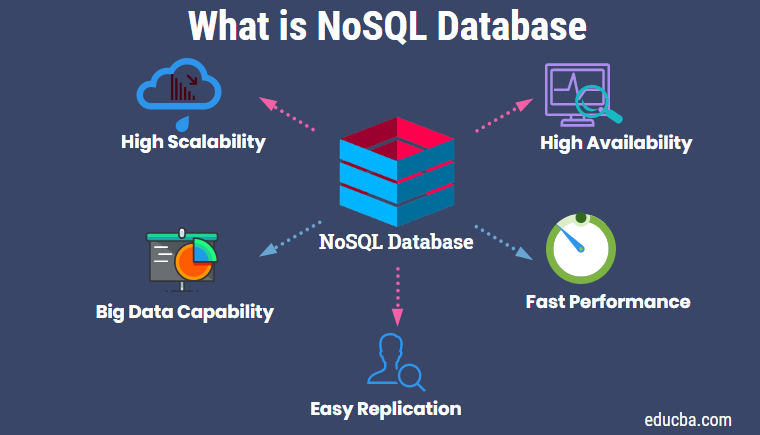
- Big Data: NoSQL databases excel at handling massive datasets that might overwhelm relational databases. Imagine a museum storing millions of digital artifacts – NoSQL can efficiently manage this variety and volume.
- Unstructured Data: NoSQL is adept at storing unstructured or semi-structured data, like social media posts, sensor readings, or email messages. Think of a museum exhibit showcasing interactive displays or multimedia presentations – NoSQL can handle this dynamic data.
- Scalability: NoSQL databases can easily scale horizontally by adding more servers to handle growing data demands. Imagine a museum expanding with new wings – NoSQL scales effortlessly to accommodate the additional exhibits.
- Performance: NoSQL databases can often deliver faster performance for specific queries, especially when dealing with large or complex datasets. Imagine quickly finding a specific artifact in the museum based on criteria beyond categories (like “all items from the 18th century”).
Common Types of NoSQL Databases:
- Document Stores: Store data in JSON-like documents, ideal for flexible and semi-structured data (like product information with varying details). Think of museum labels with rich descriptions for each artifact.
- Key-Value Stores: Store data as key-value pairs, offering fast retrieval based on unique keys (like an ID). Imagine a museum catalog where you can quickly find an artifact by its unique accession number.
- Wide-Column Stores: Store data in tables with columns that can vary in structure across rows, suitable for time-series data or sensor readings. Imagine tracking temperature data for different museum exhibits over time.
- Graph Databases: Store data as nodes (entities) and edges (relationships) between them, ideal for interconnected data (like relationships between artists and their artworks). Imagine exploring the museum and easily finding all the paintings by a specific artist.
When to Choose NoSQL?
- Large, unstructured, or diverse data: If you’re dealing with massive datasets or data that doesn’t fit neatly into predefined tables, NoSQL might be a better choice.
- Need for high scalability and performance: For situations requiring horizontal scaling and fast queries on large datasets, NoSQL can be advantageous.
- Focus on specific data relationships: If your data has complex interconnections that relational databases struggle with, NoSQL options like graph databases can be a good fit.
Here’s what you’ll gain from this lesson:
- Understand the concept and core principles of NoSQL databases compared to relational databases.
- Learn about the benefits of NoSQL for handling big data, unstructured data, and high scalability needs.
- Gain insights into different NoSQL data models like document stores, key-value stores, wide-column stores, and graph databases.
- Develop a sense of when NoSQL databases might be a better choice for your data storage requirements.
Remember: NoSQL databases offer a powerful alternative for specific data storage scenarios. While relational databases remain essential, understanding NoSQL broadens your data management toolkit and equips you to select the most suitable solution for your data needs.
Bonus Tip: Throughout the course, we’ll explore real-world examples of NoSQL applications. We’ll delve into different NoSQL data models in more detail and discuss the trade-offs between relational and NoSQL approaches. Get ready to expand your database expertise beyond the relational world!
Beyond the Relational Model: Exploring NoSQL Databases
Throughout this course, you’ve conquered the world of relational databases and SQL. But the data landscape is vast, and sometimes, relational databases might not be the perfect fit for every situation. Enter NoSQL databases – a different approach to data storage and retrieval. Imagine a museum with various exhibition halls – NoSQL offers different structures to store diverse data types, just like the museum caters to various artifacts.
What are NoSQL Databases?
NoSQL stands for “not only SQL” or “non-relational.” Unlike relational databases that use tables with predefined structures (schemas), NoSQL databases offer more flexible data models. Think of a museum exhibit that can accommodate a variety of items, from paintings to sculptures, without predefined display cases.
Why Use NoSQL Databases?
- Big Data: NoSQL databases excel at handling massive datasets that might overwhelm relational databases. Imagine a museum storing millions of digital artifacts – NoSQL can efficiently manage this variety and volume.
- Unstructured Data: NoSQL is adept at storing unstructured or semi-structured data, like social media posts, sensor readings, or email messages. Think of a museum exhibit showcasing interactive displays or multimedia presentations – NoSQL can handle this dynamic data.
- Scalability: NoSQL databases can easily scale horizontally by adding more servers to handle growing data demands. Imagine a museum expanding with new wings – NoSQL scales effortlessly to accommodate the additional exhibits.
- Performance: NoSQL databases can often deliver faster performance for specific queries, especially when dealing with large or complex datasets. Imagine quickly finding a specific artifact in the museum based on criteria beyond categories (like “all items from the 18th century”).
Common Types of NoSQL Databases:
- Document Stores: Store data in JSON-like documents, ideal for flexible and semi-structured data (like product information with varying details). Think of museum labels with rich descriptions for each artifact.
- Key-Value Stores: Store data as key-value pairs, offering fast retrieval based on unique keys (like an ID). Imagine a museum catalog where you can quickly find an artifact by its unique accession number.
- Wide-Column Stores: Store data in tables with columns that can vary in structure across rows, suitable for time-series data or sensor readings. Imagine tracking temperature data for different museum exhibits over time.
- Graph Databases: Store data as nodes (entities) and edges (relationships) between them, ideal for interconnected data (like relationships between artists and their artworks). Imagine exploring the museum and easily finding all the paintings by a specific artist.
When to Choose NoSQL?
- Large, unstructured, or diverse data: If you’re dealing with massive datasets or data that doesn’t fit neatly into predefined tables, NoSQL might be a better choice.
- Need for high scalability and performance: For situations requiring horizontal scaling and fast queries on large datasets, NoSQL can be advantageous.
- Focus on specific data relationships: If your data has complex interconnections that relational databases struggle with, NoSQL options like graph databases can be a good fit.
Here’s what you’ll gain from this lesson:
- Understand the concept and core principles of NoSQL databases compared to relational databases.
- Learn about the benefits of NoSQL for handling big data, unstructured data, and high scalability needs.
- Gain insights into different NoSQL data models like document stores, key-value stores, wide-column stores, and graph databases.
- Develop a sense of when NoSQL databases might be a better choice for your data storage requirements.
Remember: NoSQL databases offer a powerful alternative for specific data storage scenarios. While relational databases remain essential, understanding NoSQL broadens your data management toolkit and equips you to select the most suitable solution for your data needs.
Bonus Tip: Throughout the course, we’ll explore real-world examples of NoSQL applications. We’ll delve into different NoSQL data models in more detail and discuss the trade-offs between relational and NoSQL approaches. Get ready to expand your database expertise beyond the relational world!